From Yoga to Strength Training: How Women Can Add Load Without Losing Mobility
- Shaini Verdon
- 12 minutes ago
- 5 min read

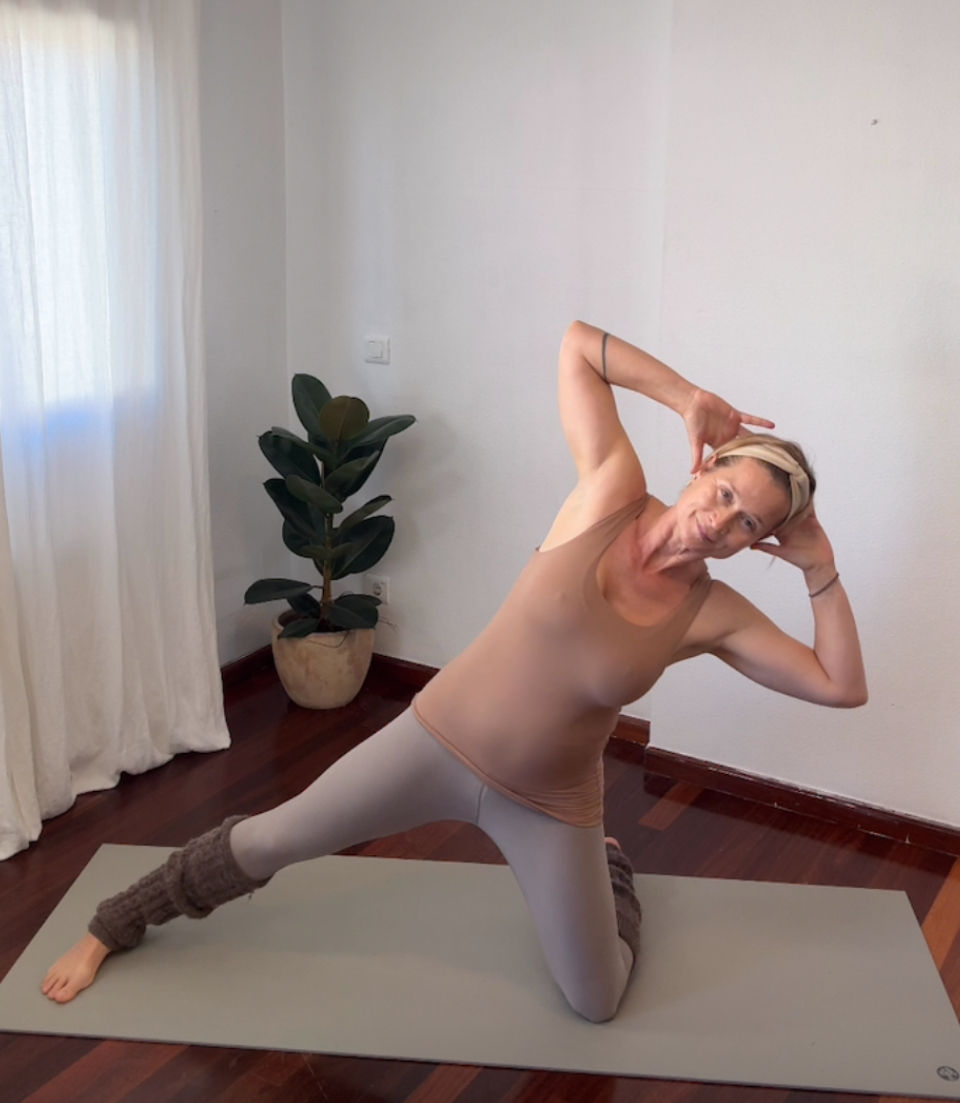
At a certain point, many women arrive at the same realisation:
I know I need to add load.
They’ve come from years of yoga, Pilates, bodyweight work, or mindful movement. They move well. They feel their bodies. They have coordination, awareness, and mobility.
But they also know that as they age, strength training becomes non-negotiable.
Bone density.Muscle mass.Long-term resilience.
And suddenly, the message everywhere is blunt and loud: lift heavy or lose everything.
This is where many women feel caught.
They don’t want to abandon movement quality. They don’t want to trade awareness for brute force. And they don’t want to pretend that stretching and mobility alone are enough.
The real question isn’t whether women should strength train.
The real question is: How do you add load without losing how your body moves and feels?
Why Heavy Weights Demand Simple Movements
There’s a reason traditional strength training relies on a small number of familiar exercises:
Deadlifts.Squats.Presses.Rows.
These movements are intentionally simple.
When load increases, the body needs fewer degrees of freedom. The heavier the weight, the more constrained the movement has to be. This isn’t a flaw — it’s physics and biomechanics.
Heavy load requires:
Predictable joint positions
Clear force vectors
Reduced variability
This is why you don’t see deep rotation, side bending, or complex transitions under maximal load. The goal is force production, not movement exploration.
And for building raw strength and bone density, this simplicity is effective.
But simplicity also has a cost.
What Gets Lost When Load Is the Only Priority
When strength training is reduced to “just lift heavier,” several things quietly disappear:
Rotational capacity
Lateral strength
End-range control
Unilateral stability
Neurological adaptability
The body gets strong in a narrow set of patterns — but less adaptable outside of them.
For younger bodies with high recovery capacity, this often goes unnoticed. For women in their late 30s, 40s, and beyond, it starts to matter.
Because strength at this stage of life isn’t just about how much you can lift.
It’s about how well you can organise force, control movement, and stay stable in less predictable positions.
Why This Matters More for Women as We Age
As women move through hormonal transition, several physiological shifts occur:
Reduced hormonal support for muscle repair
Greater risk of sarcopenia
Changes in connective tissue resilience
Higher recovery cost from poor mechanics
This doesn’t mean women become fragile. But it does mean mistakes cost more.
Load applied to a body that can’t stabilise, rotate, or control end ranges doesn’t build resilience — it exposes weakness.
This is where many women feel stuck between two unsatisfying options:
Heavy lifting that feels disconnected or risky
“Gentle” movement that feels insufficient
Neither is wrong. Neither is complete.

Progressive Overload Doesn’t Only Mean Heavier Weights
Moving from Yoga to Strength training.
Progressive overload is essential. But weight is only one way to create it.
You can also increase load through:
Time under tension
Longer lever arms
End-range positioning
Asymmetry
Multi-planar movement
A movement performed with lighter weights, but greater leverage, rotation, or range, can create a significant strength stimulus — especially for the stabilising and deep support systems of the body.
This is where many women from Pilates or yoga backgrounds actually have an advantage.
They already understand:
How to feel load internally
How to move with control
How to stay present under challenge
What they often lack is external load applied intelligently.
The Missing Middle: Load Without Losing Movement
This is exactly why I created SoulSculpt.
After years of yoga, Pilates, and movement-based practices, I could feel that my body needed more load — but I wasn’t willing to give up mobility, awareness, or the way movement felt in my nervous system. At the same time, I could see that simply adding heavier weights without preparation wasn’t the answer either.
SoulSculpt grew out of that tension. It’s not a rejection of strength training, and it’s not a softer alternative. It’s a way of building load capacity intelligently — so the body is prepared, responsive, and resilient, not just strong on paper.
In this approach:
Load is added without collapsing movement quality
Strength is built through coordination, not just force
The nervous system stays engaged, not overwhelmed
This might look like:
Lower to moderate weights
Longer time under tension
Side bending, rotation, and anti-rotation under load
Unilateral and asymmetrical positions
End-range strength, not just mid-range power
The body is still being challenged — but in more dimensions.
Why This Actually Makes You Stronger
Strength isn’t just how much force you can produce.
It’s how well you can:
Stabilise under load
Transfer force through the body
Maintain control when conditions change
When women later introduce heavier weights, something interesting happens.
The body already knows how to:
Organise tension
Find stability
Stay connected under stress
Heavier lifting becomes safer, more confident, and more effective — not because the weight is lighter, but because the system is better prepared.
This is strength built from the inside out.
Somatic Strength Training: Awareness Under Load
This approach could be described as somatic strength training.
Not in a vague or spiritual sense — but in a practical one.
It means:
You can feel what’s working
You can sense when load is productive versus destabilising
You’re not dissociated while training
This matters more with age, not less.
Because the goal isn’t domination over the body. It’s collaboration with it.

Why Women Don’t Need to Choose One Method
The conversation shouldn’t be: Yoga or strength training?
It should be: from Yoga to strength training and how do these methods support each other?
Heavy lifting:
Builds bone density
Builds maximal strength
Intelligent, multi-planar loaded movement:
Builds coordination
Builds joint resilience
Builds nervous system capacity
Together, they create a body that is not only strong — but adaptable.
And adaptability is what carries women through the next decades.
Strength Is a Capacity, Not a Single Exercise
Strength doesn’t live in one movement pattern.
It lives in your ability to:
Move well
Handle load
Recover intelligently
Stay connected to your body over time
As women age, the answer is not to move less — or to push harder.
The answer is to train with more intelligence.
This is not about abandoning what you know. It’s about evolving it.
Final Thought
If you’re coming from a yoga or Pilates background and wondering how to add strength without losing mobility, awareness, or trust in your body, the best way to understand this approach is to experience it.
SoulSculpt combines intelligent load, multi-planar movement, time under tension, and nervous-system-aware training — designed specifically for women who want to feel strong and organised in their bodies.
Explore how strength, mobility, and coordination can work together — without pushing harder or disconnecting from your body.
With love,
Shaini


Comments