Types of Stretching Explained: Static, Dynamic & Loaded
- Shaini Verdon
- Sep 8
- 3 min read

Introduction: Stretching Isn’t Just Touching Your Toes
Most people think stretching is just about bending over and touching your toes. But in reality, there are several types of stretching, each with a different purpose and effect on your body.
In this guide, I’ll explain three types of stretching I focus on in SoulSculpt—static, dynamic, and loaded—and why moving beyond static holds has been such a powerful shift for me and for the women I work with.

Why the Types of Stretching Matter for Women 40+
Stretching influences much more than flexibility. The type of stretching you practise affects your muscles, fascia, joints, and even your nervous system. Choosing the right approach can:
Improve range of motion and mobility
Support strength and stability
Reduce stiffness and discomfort from daily life
Enhance athletic performance
Build resilience as we age
In our 40s and through perimenopause, the body undergoes changes in hormones, connective tissue, and bone density. That’s why understanding the types of stretching matters: not every method supports these shifts equally. Static stretching can calm the system, but dynamic and loaded stretching prepare the body for the realities of life—lifting, bending, twisting, and carrying with strength.
Static Stretching: The Classic Hold
Static stretching is the most familiar style: holding a stretch without moving.
Passive static: using gravity, props, or another person to hold you in place (e.g. a yoga forward fold).
Active static: holding the position with your own muscular effort (e.g. lifting your leg and keeping it up without your hands).
Why it’s valuable:
Encourages release
Calms the nervous system
Familiar in yoga and cool-downs
Limitations:
Builds little strength
Doesn’t always prepare you for functional movement
I still use static stretching when relaxation and release are the goal—but it’s no longer my main focus.
Dynamic Stretching: Movement Through Range
Dynamic stretching involves moving in and out of a stretch with control, flowing through the joint’s range rather than holding still.
Examples: Walking lunges, leg swings, spinal rotations, flowing squats.
Why it’s valuable:
Prepares muscles & joints for real-life movement
Improves circulation and synovial fluid flow
Builds mobility by combining flexibility, strength, and control
This shift into dynamic stretching was the first big change in my own practice. It made me feel more alive, more prepared, and more capable of meeting daily demands—not just calm after yoga class, but strong and ready for life.
Loaded Stretching: Strength at Length
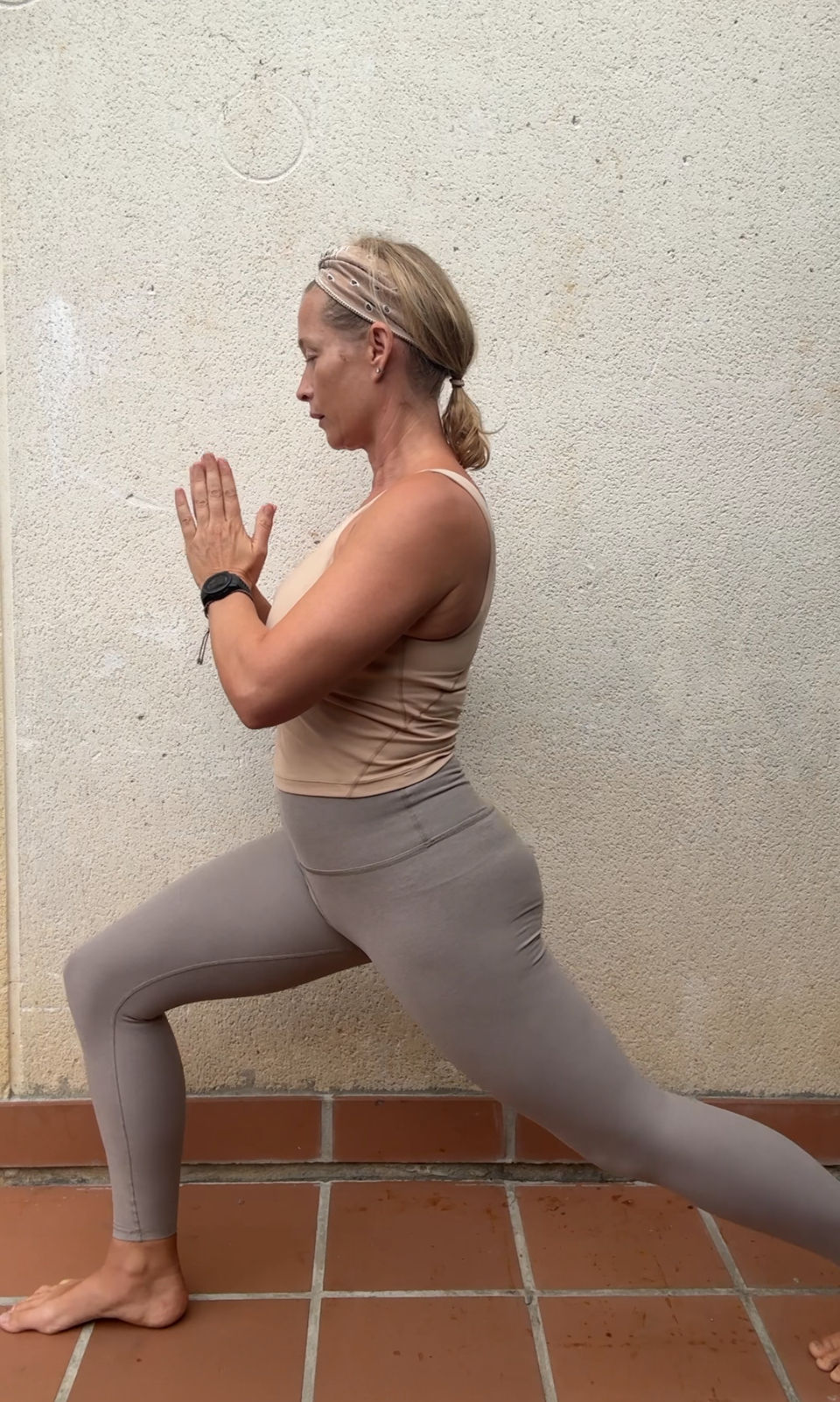
Loaded stretching takes the idea further. You enter a stretch while under load—using your own body weight, a dumbbell, a kettlebell, or resistance—so the muscle strengthens at its lengthened position.
Examples:
Weighted split squat for hip flexors
Roll downs with weights for hamstrings and spine
Why it’s valuable:
Builds resilience in end ranges
Stimulates fascia, tendons, and bone
Trains your body not just to access a position, but to own it
Loaded stretching is where I see the biggest transformation. For women 40+, it’s particularly powerful: it protects joints, builds bone density, and strengthens tissues in a way that supports long-term mobility and independence.
From Static to Dynamic & Loaded: My Evolution
For years, my yoga practice was built almost entirely on static stretching. It gave me release, but not always strength.
When I discovered dynamic stretching, my body felt different: more ready for real life, more resilient in daily movements. Adding loaded stretching took it even further—suddenly, stretching wasn’t just about flexibility, it was about strength at length, and a whole new level of confidence in my body.
That’s why in SoulSculpt, I weave in static stretching when relaxation is needed, but place the emphasis on dynamic and loaded stretching. For women 40+, this shift is game-changing: it supports hormone-related changes in muscles, fascia, and bones while keeping movement powerful and pain-free.
Conclusion: Stretching as Evolution
Stretching isn’t one-size-fits-all. For me, it’s been an evolution:
From static holds on the yoga mat,
To dynamic movements that feel alive,
To loaded stretches that merge strength and flexibility.
This shift has transformed how I move—and it’s why SoulSculpt centres on the types of stretching that not only increase flexibility, but also build lasting strength and resilience.
With love,
Shaini x


Comments